Heart's Garden
A City that called itself kind...

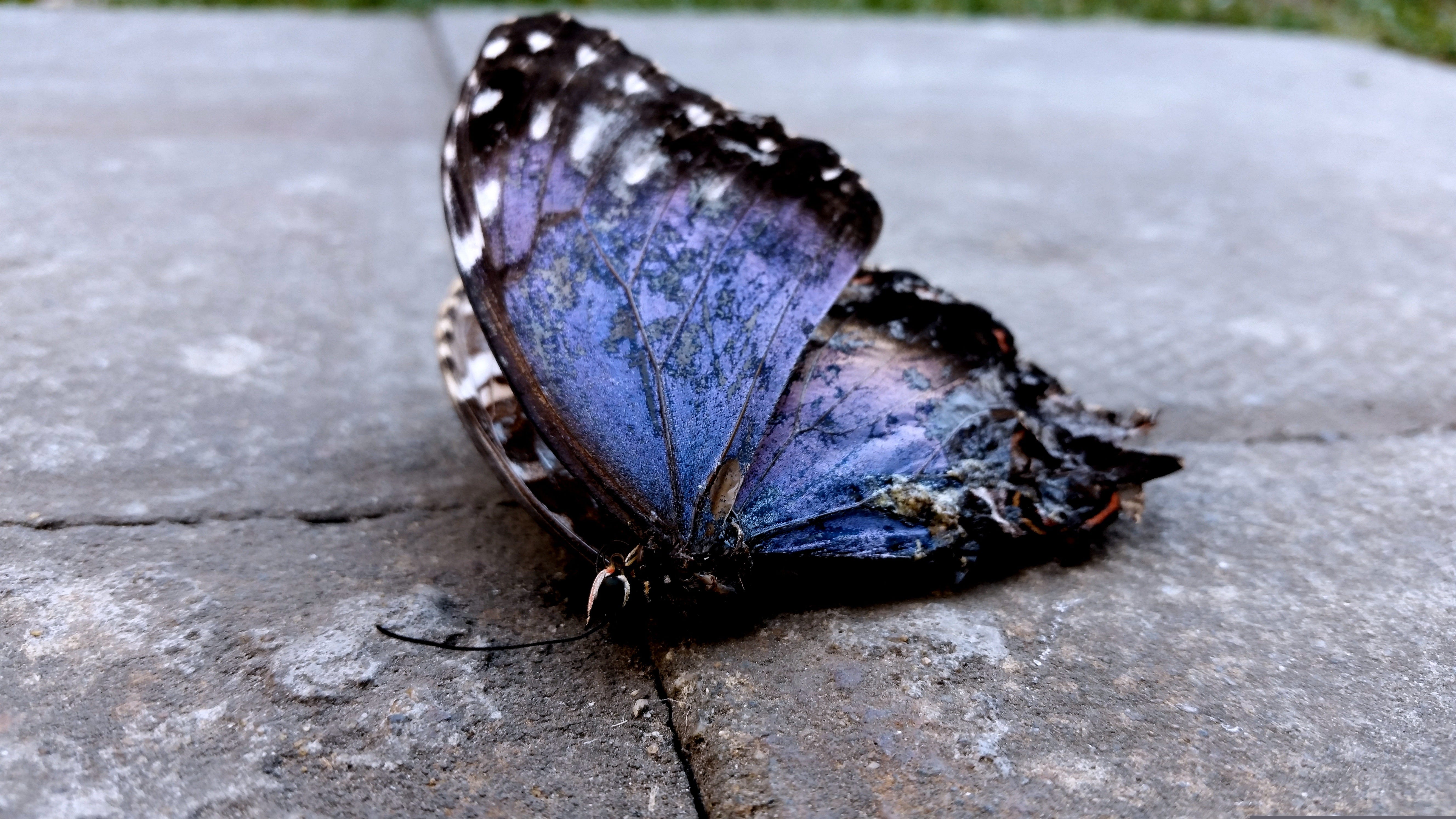
The city called itself kind before it called itself anything else. Ask anyone who had lived there and they would tell you how the whole place had been run on warmth, hospitality that turned strangers into neighbors, that bloomed from within in a generalization that was larger than life. There was a garden at the city’s center, so ancient that none could remember its planting, where every year butterflies arrived to ask the same question as last year and the year before, asking it of the garden, asking it of the city.
A promise kept to them long ago,
still kept.
Wings…
mostly.
The bees who watched over the garden were generally to be found as trusted as an old fence, and as orderly and orderly bees, like all orderly things, were more likely to follow rules than make them, which had, until recently, simply meant that they were slow to make them. A bee might pause when faced with the writhing, wounded form of a butterfly caught in the underbrush, but until very recently, that pause had never been a reason to withhold a promotion or transfer order, to cut that bee off from the better flowers, from the new positions of influence in the hive, and so the tendency had been pruned right along with other indulgences,
gradually,
until it hardly ever happened.
Hive it seemed, had little interest in the matter and little interest in drawing attention to it and so pause between hesitation and action became as much a part of the city as the garden at its heart, as much a part of the city as the walls that kept it safe or the language that kept it whole.
New orders came,
around the same time the old hive master was replaced and the bees who delivered them were largely the same bees who had received them, still fresh from their long service of being molded into something the hive needed them to be. Alongside them, insects of unfamiliar variety and faster pace arrived at the garden walls, wearing stripes like bees but bearing no allegiance the hive could name, and in general proving far more efficient at their jobs than anyone had reason to hope would ever be necessary, and as far as the hive was concerned that was perfectly fine since an insect without a name or place to belong could hardly be held responsible for misjudging a situation.
Everyone after that
it seemed
was referred to as a bee.
Some butterflies failed to rise again afterwards. The bees who had watched them fall returned to their hives to eat and sleep and, if they thought about it at all, wonder at the strange sharpness with which their orders had come down, and if they had stopped to think about it for longer than a moment they would have realized, perhaps that it was simply a matter of time. Any creature could be trained to feel nothing at all if the time came, and the place to be, and the orders to obey were all clearly marked, and the rewards for compliance just as clearly delineated, and so even the bees who had stopped hesitating were largely unaware of the thing that had made it stop and all of them paid the price in one way or another, because it always does.
Above the garden eyes had watched and waited, to see what would happen and then to report it to the rest of the city and some of those eyes were clear and true and saw what happened to that grass on that afternoon, and it cost them. A few were taken along with the butterflies and one had lost an eye entirely to the business of peering in a direction it didn’t particularly want to look.
Most of them
nevertheless
had undergone a similar education, if one less intense, and they had learned, over the course of several years, that the best way to keep a position was to keep their own eyes half closed in the performance of their duties, and so on that afternoon those eyes saw a garden at peace, and insects who served it well, who knew their place, who brought the stinging the butterflies had brought upon themselves and a lovely day in general.
Whatever record of that day was later drawn up and stored in the appropriate location for the appropriate people to find at the appropriate time, it was largely in agreement with those half-closed eyes. It said that nothing unpleasant had happened to anything that landed in that garden that day. It said explicitly that some of those things had taken flight in a most ungrateful manner and failed to return to their places of service, and when those eyes were closed, it said nothing at all about those things that hadn’t rise again afterwards. It said that the hive was doing well, that the bees were strong and that the city had reason to be proud, and not a word of it was untrue in any real sense. It said everything necessary for as long as anyone was willing to listen.
People who had stood at the edge of the garden nevertheless feel, when the wind shifts so
weight of the things that are not said.
The record has no need to agree with them, strictly speaking and it certainly doesn’t have to listen, but it does, sometimes, and so do the bees who watch it from beyond the wall, if they know where to look, in whatever remains of their hearts that hasn’t been hollowed out.
The city still calls itself kind.
The garden still blooms every spring.
The bees still return to their hive at dusk.
Only the butterflies remember
where the blood first touched the flowers.
Butterflies asked for spring, Bees brought winter.
This Substack is reader-supported.
To receive new posts and support my work,
consider becoming a subscriber.
"only butterflies remember where blood first touched the flowers" & i had to put my laptop down after that line because u said everything without saying anything & somehow that made it land harder than saying it directly would have. i read this yesterday & i kept coming back to "the city still calls itself kind" because that specific line is doing something that most writing about this moment is naut doing & i do naut have better words for it than that💚 & i loved it💚💚
Loved it shivaay, but i want your poetry collection. So write is fast❤️